
Alwalkeria
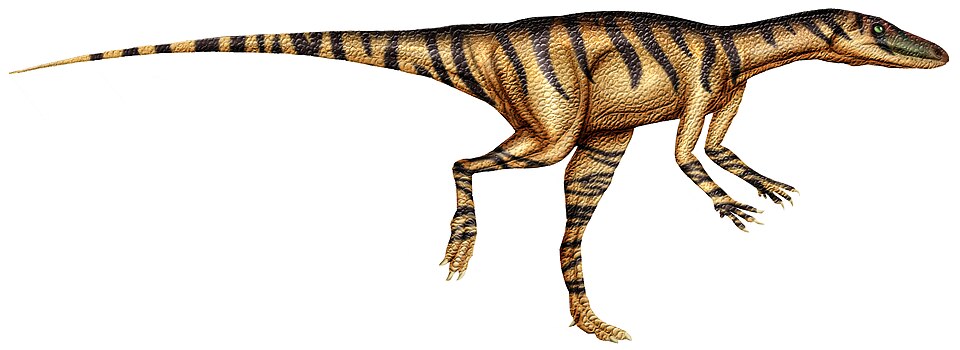
Alwalkeria was a small, early reptile that lived during the Late Triassic in what is now India. It is known from only a few bones, and scientists are still debating whether it was a dinosaur or a close relative.1
When did it live?
Fun facts
Alwalkeria was first named Walkeria in 1987, but that name was already used for a tiny sea animal, so it was changed to Alwalkeria in 1994.1
The only known fossil of Alwalkeria is a jumble of bones from different animals, including a skull that may belong to a crocodile relative and leg bones that might be from a dinosaur.1
Alwalkeria lived about 235 to 228 million years ago, during the Carnian stage of the Triassic period.1
The leg bone of Alwalkeria looks a bit like those of early dinosaurs, but some scientists think it might belong to a different group of reptiles called pseudosuchians.1
Alwalkeria is named after British paleontologist Alick Walker, who studied ancient reptiles.1
Because the fossils are so mixed up, scientists are not sure what Alwalkeria ate or how big it was.1
For dino experts
- Scientific name
- Alwalkeria
- Named by
- Chatterjee and Creisler 19942
- Group
- First dinosaurs
- Family / clade
- Saurischia2
- Age of the rocks
- 237 to 227 million years (Carnian)2
- Rock formations
- Maleri2
- Countries
- India2
- Fossil records
- 1 in the Paleobiology Database2
- Discovery
- Alwalkeria was discovered in 1974 by Sankar Chatterjee in the Maleri Formation of Andhra Pradesh, India. It was first described in 1987 as Walkeria, but the name was changed in 1994 because it was already taken.1
- Still debated
- Scientists are still debating whether Alwalkeria was a dinosaur, a close relative, or a mix of bones from different animals.1
Where the facts come from
- Alwalkeria (en.wikipedia.org)
- Alwalkeria in The Paleobiology Database (CC BY 4.0): age, places, rock formations, classification.
Every fact on this page has a number that points to its source. If we got something wrong, sorry, we are dino fans, not a science journal. Tell us at hello@dinowiki.app and we will fix it.
 Rex is hungry! Dino Wiki is free with no ads. Grown-ups can feed Rex a snack to keep it that way.Feed Rex
 Herrerasaurus
 Tawa
Tawa Chindesaurus
 Nyasasaurus
 Staurikosaurus
 Daemonosaurus
 Nothosaurus
 Massospondylus
 Plateosaurus
 Coelophysis
 Podokesaurus
 Simosaurus