
Martinavis
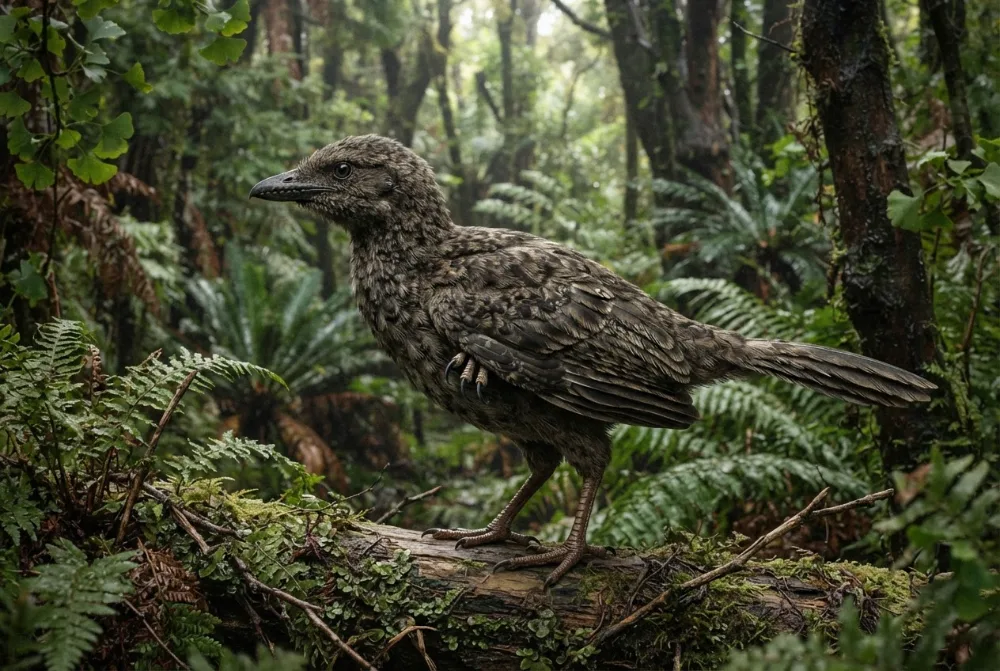
Martinavis was a prehistoric bird that lived alongside the last dinosaurs. It was about the size of a crow or a small seagull and could fly. It lived in what is now France, Argentina, and maybe North America.1
When did it live?
How big was it?
Fun facts
Martinavis is known from only a few arm bones, mostly humeri. Scientists have named five different species based on these bones.1
The largest species, Martinavis vincei, was about 51 cm long and weighed around 1.8 kg. That is as heavy as a big chicken.1
Martinavis belonged to a group of ancient birds called enantiornithines. These birds had teeth and claws on their wings.1
Fossils of Martinavis have been found in France and Argentina. This shows that these birds lived in both Europe and South America during the Late Cretaceous.1
The type species, Martinavis cruzyensis, was named after the village of Cruzy in France where its fossil was found.1
Martinavis lived about 75 to 70 million years ago, during the Campanian and Maastrichtian stages of the Late Cretaceous.1
For dino experts
- Scientific name
- Martinavis
- Named by
- Walker et al. 20073
- Group
- Early birds
- Family / clade
- Euenantiornithes3
- Classification
- Theropoda > Avialae3
- Age of the rocks
- 84 to 66 million years (Campanian to Maastrichtian)3
- Rock formations
- Lecho, Grès à Reptiles3
- Countries
- Argentina, France3
- Fossil records
- 6 in the Paleobiology Database3
- Discovery
- Martinavis was named in 2007 by Cyril A. Walker, Eric Buffetaut, and Gareth J. Dyke. The first fossils were found in France and Argentina.1
- Still debated
- Scientists are not sure if some Martinavis bones actually belong to other enantiornithine birds from the same fossil sites, like Yungavolucris or Soroavisaurus.1
Where the facts come from
- Martinavis (en.wikipedia.org)
- PBDB Taxon (paleobiodb.org)
- Martinavis in The Paleobiology Database (CC BY 4.0): age, places, rock formations, classification.
Every fact on this page has a number that points to its source. If we got something wrong, sorry, we are dino fans, not a science journal. Tell us at hello@dinowiki.app and we will fix it.
 Rex is hungry! Dino Wiki is free with no ads. Grown-ups can feed Rex a snack to keep it that way.Feed Rex
 Archaeopteryx
 Hesperornis
 Ichthyornis
 Baptornis
 Jurapteryx
 Gobipteryx
 Triceratops
 Velociraptor
 Spinosaurus
 Ankylosaurus
 Parasaurolophus