When did it live?

Fun facts
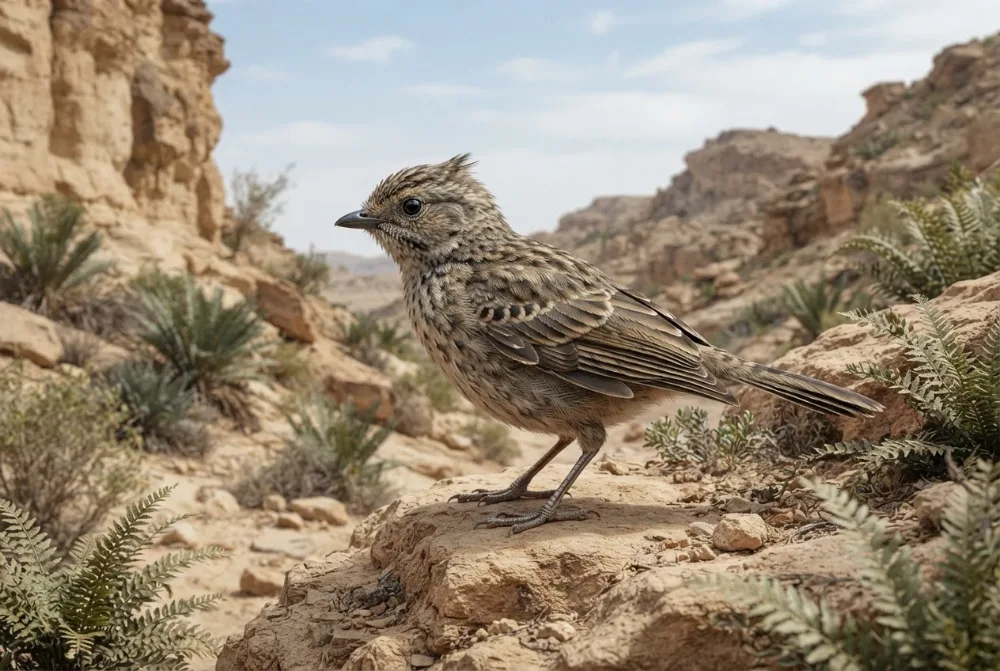
Gobipteryx had a toothless beak, which is rare for a bird from the time of dinosaurs.1
Scientists think Gobipteryx could fly right after hatching, because its wing and shoulder bones were already strong in the egg.1
Gobipteryx was about the size of a partridge, with a skull only 45 millimeters long.1
The first Gobipteryx fossils were two damaged skulls found by a Polish-Mongolian expedition in 1971.12
Gobipteryx belongs to a group of ancient birds called Enantiornithes, which all went extinct at the end of the Cretaceous.1
Its bones grew quickly, like those of modern birds, but its growth slowed down right after hatching.1
For dino experts
- Scientific name
- Gobipteryx
- Named by
- Elzanowski 19743
- Group
- Early birds
- Family / clade
- Enantiornithes3
- Classification
- Theropoda > Avialae3
- Age of the rocks
- 84 to 66 million years (Campanian to Maastrichtian)3
- Rock formations
- Baruungoyot, Djadokhta, Nemegt3
- Countries
- Mongolia3
- Fossil records
- 8 in the Paleobiology Database3
- Discovery
- Gobipteryx was named by Andrzej Elzanowski in 1974, based on a skull found in the Gobi Desert by Dr. Teresa Maryańska during a 1971 expedition.12
- Still debated
- Scientists are still debating exactly how Gobipteryx is related to other ancient birds, because its skull is unusual.1
Where the facts come from
- Gobipteryx (en.wikipedia.org)
- PRELIMINARY NOTE ON THE PALAEOGNATHOUS BIRD FROM THE UPPER CRETACEOUS OF MONGOLIA (palaeontologia.pan.pl)
- Gobipteryx in The Paleobiology Database (CC BY 4.0): age, places, rock formations, classification.
Every fact on this page has a number that points to its source. If we got something wrong, sorry, we are dino fans, not a science journal. Tell us at hello@dinowiki.app and we will fix it.
 Rex is hungry! Dino Wiki is free with no ads. Grown-ups can feed Rex a snack to keep it that way.Feed Rex
 Archaeopteryx
 Hesperornis
 Ichthyornis
 Baptornis
 Jurapteryx
 Martinavis
 Triceratops
 Velociraptor
 Spinosaurus
 Ankylosaurus
 Parasaurolophus