
Neuquenornis
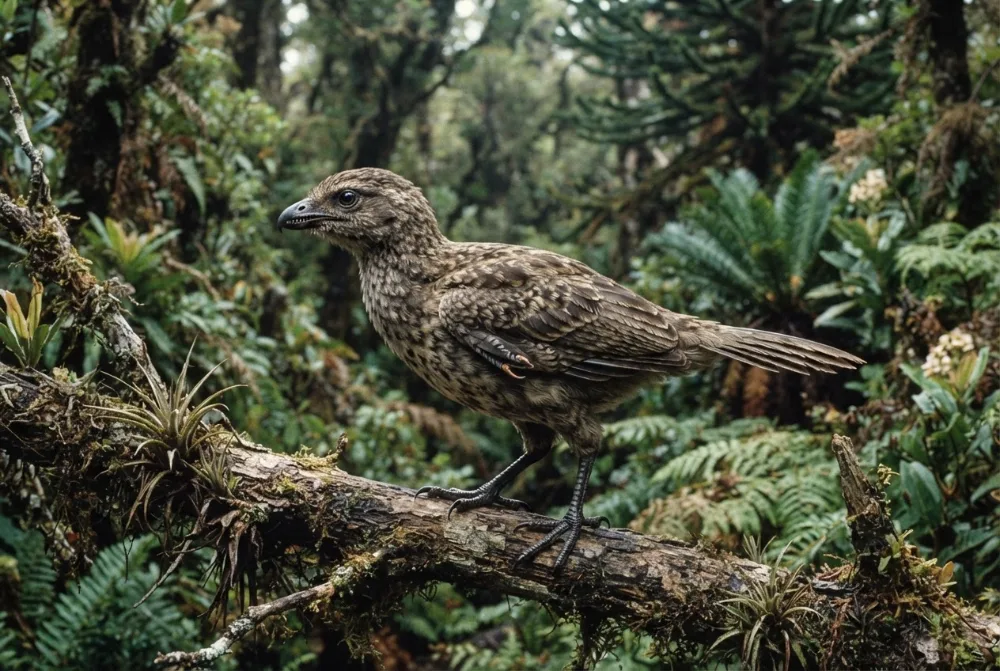
Neuquenornis was a small, flying bird that lived in what is now Argentina during the time of the dinosaurs. It had long legs and hooked claws, perfect for perching in trees and grabbing food on the ground or in shallow water.1
Ɗuum wuurii nde?
Hol no o mawni?
No juutuno?
No toowuno?
No tedduno?
Hol no Neuquenornis mawninoo, so fondaama bee AAN?
Hiisa tan nder browser maa. Walaa huunde danndetee walla neldetee ka nokku fuu.
How fast was it?
Anndal belɗungal
Neuquenornis belonged to a group of ancient birds called enantiornithes, which had teeth and claws on their wings.1
Its name means 'flying bird from Neuquén Province' because its fossils were found in that part of Argentina.1
This bird lived about 85 to 83 million years ago, during the Late Cretaceous period.1
Scientists think Neuquenornis was an active flyer, based on the shape of its wing and shoulder bones.2
A nesting colony has been linked to Neuquenornis, suggesting it buried its eggs like modern megapode birds.1
The only known fossil of Neuquenornis is a nearly complete skeleton, including a skull, found in the Río Colorado Formation.2

Naamnu Rex fii Neuquenornis
Rex jaabata ƴamle dow hello ngo'o tan. Ƴamle 10 e lewru.
Rex ko AI, o waawi waɗugo juumre. O golla ka serverji nder EU, naamne danndetaake abada. Taa winndu innde maa walla huunde goɗnde ngam maa.
Ngam annduɓe dino
- Innde ganndal
- Neuquenornis
- Inndoowo
- Chiappe and Calvo 19943
- Fedde
- Colli arani
- Fedde / clade
- Avisauridae3
- Fedde
- Theropoda > Avialae3
- Duuɓi kaaƴe
- 86 haa 84 miliyon duuɓi (Santonian)3
- Cuuɗi kaaƴe
- Bajo de la Carpa3
- Leyɗe
- Argentina3
- Fosilji tawaaɗi
- 2 nder Paleobiology Database3
- Tawgol
- Neuquenornis was named and described by Luis M. Chiappe and Jorge O. Calvo in 1994, based on a fossil found in Patagonia, Argentina.31
- Haa jooni ɓe ɗon yeddondira
- Scientists are still debating exactly how Neuquenornis is related to other enantiornithine birds. Some studies place it near Avisaurus, while others think it is closer to Concornis and Cathayornis.1
To haalaaji ummii
- Neuquenornis (en.wikipedia.org)
- Neuquenornis volans , a new Late Cretaceous bird (Enantiornithes: Avisauridae) from Patagonia, Argentina (tandfonline.com)
- Neuquenornis in The Paleobiology Database (CC BY 4.0): duuɓi, nokkuuje, cuuɗi kaaƴe, pecce.
Kala anndal nder ngal hello mari limre holloore iwdi mum. Si min mbaɗii juumre, yaafo min, min ko yiɗɓe dino, min wanaa jaaynde anndal. Haalan min ka hello@dinowiki.app, min moƴƴinan ɗum.
 Rex ɗon weelo! Dino Wiki, ɗum golle baaba ngam ɓiyiiko gorko mo yiɗi dinosauruuji, alaa njoɓdi, alaa ko yeeyata. Mawɓe mbaawi hokkude Rex ñaamdu ngam wallude lowre ndee heddoo e internet.Nyaamnu Rex
 Archaeopteryx
 Hesperornis
 Ichthyornis
 Baptornis
 Jurapteryx
 Gobipteryx
 Tyrannosaurus
 Triceratops
 Velociraptor
 Spinosaurus
 Ankylosaurus
 Parasaurolophus